
Jun 24, 2026, 8:45:01 AM
What It Actually Takes to Work a Trade Show
PEAS Insights | Business Development
Trade shows get pitched as easy wins. Show up, shake hands, collect business cards, grow your pipeline. The reality is both more complicated, and more rewarding than that.
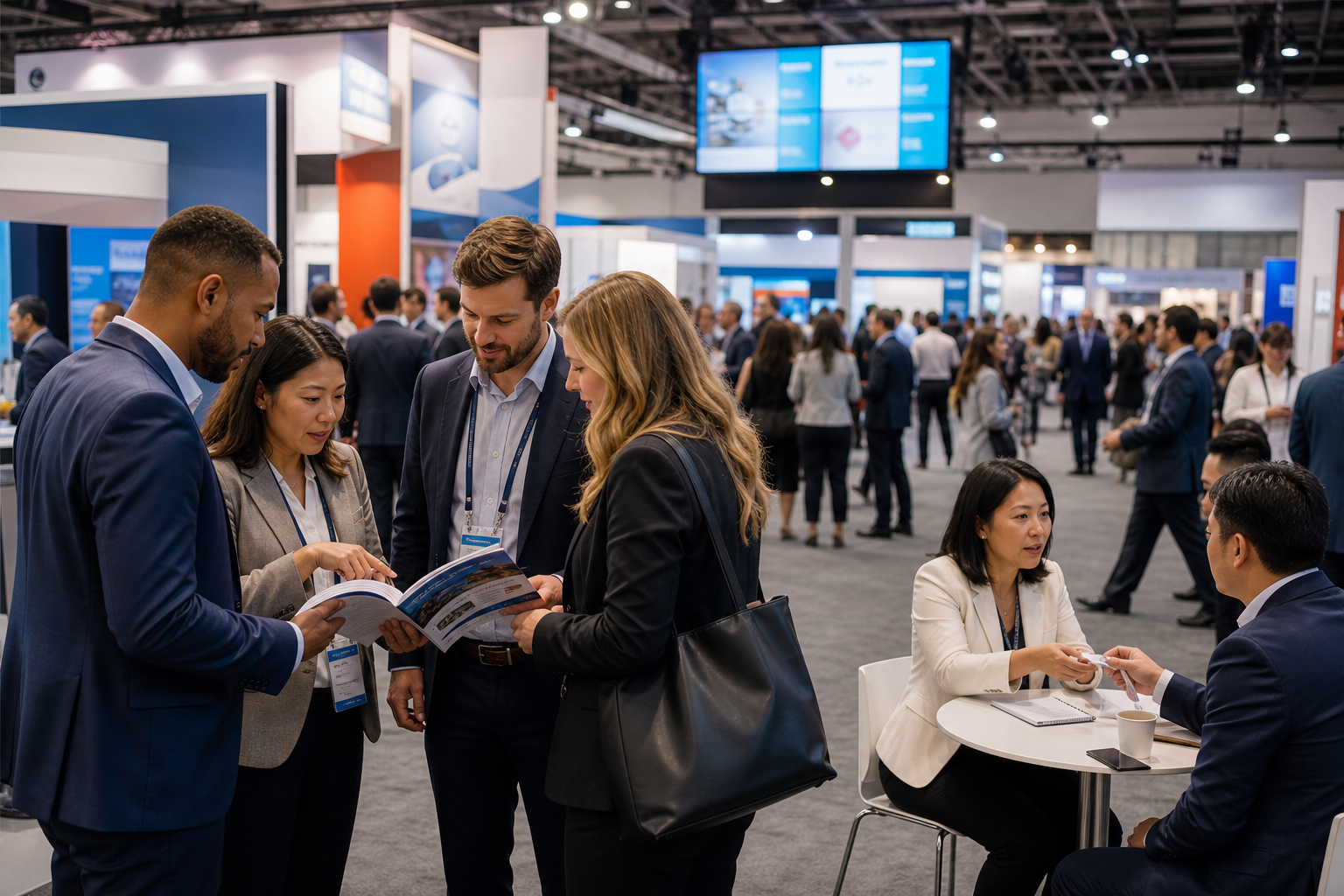
The PEAS team recently attended SEUS-CP (the Southeastern United States – Canadian Provinces Conference) in Greenville, South Carolina. It was a focused B2B matchmaking event bringing together small and mid-sized businesses, manufacturers, tech providers, and procurement leaders from across 12 jurisdictions in eastern Canada and the southeastern U.S.
It was a reminder of something we already knew: showing up is only the beginning. What you do before, during, and after a trade show is what determines whether it was worth the investment.
Why Trade Shows Still Matter in 2026
Despite every digital channel available to B2B sellers, the in-person event market is growing, not shrinking. The U.S. B2B trade show market hit $15.78 billion in 2024, finally surpassing pre-pandemic levels, and is projected to reach $17.3 billion by 2028.
The reason is straightforward. The quality of contact at a trade show is different from anything a LinkedIn message or cold email can replicate. According to CEIR data, 81% of trade show attendees have buying authority and 67% of them are prospects that exhibiting companies haven't reached before. You're not pitching into the void. You're in a room with decision-makers who showed up to evaluate solutions.
That said, a room full of buyers doesn't automatically produce results. The data on follow-through is sobering. 80% of trade show leads never receive any follow-up. That's not a trade show problem but a business development process problem that needs to be solved.
The Work Before the Event
The exhibitors who get the most out of trade shows treat them as campaigns, not appearances. Preparation matters more than any booth design.
Before SEUS-CP, that meant clarifying objectives. What did we want to walk away with? Connections in specific sectors? Meetings with certain company types? Or broader awareness within the region? Without clear goals, there's no way to evaluate whether the event delivered.
It also meant doing the research. SEUS-CP is structured around B2B matchmaking, so understanding who would be in the room, which anchor companies were attending, what sectors were represented, what procurement needs were on the table. This allowed for more intentional conversations rather than reactive ones.
Pre-show outreach also plays a role. Warm introductions and scheduled meetings convert at a higher rate than cold conversations on the floor. Getting on someone's calendar before the event is significantly easier than chasing them after (Something we made sure to do!).
What Happens on the Floor
Trade show floors are noisy, tiring, and full of competing priorities. The conversations that matter are the ones with enough focus to go somewhere.
At SEUS-CP, the structured matchmaking format helped. Rather than general networking, participants were paired with relevant counterparts. This meant time wasn't wasted on conversations with no fit. That kind of structure raises the quality of engagement considerably.
Still, even in a well-organized event, how you show up matters. The instinct is to talk about your services. The better approach is to lead with questions, understand the problem before offering the solution. That's true in sales generally, and it's especially true at trade shows where you have limited time and the person across from you has been pitched all day.
The other factor is note-taking. Not in a formal way, but capturing enough context about each conversation, being the person's role, their challenge, what they were evaluating. This way, that follow-up can be specific. Generic follow-up emails are the fastest way to undo a strong in-person conversation.
The Work After the Event
This is where most of the value is either captured or lost.
The statistics are striking. 51% of attendees request a follow-up visit after a trade show. Yet the 80% who never receive meaningful follow-up represent a straightforward competitive advantage for anyone willing to do the work. Converting a trade show lead costs 38% less than pursuing the same prospect through a cold outreach cycle, but only if someone actually follows up.
Speed matters. Research consistently shows that the first responder wins a disproportionate share of deals. Post-event, that means getting back to priority contacts within 24–48 hours while the conversation is still fresh for both sides.
It also means not treating every contact the same. Some conversations will have identified a clear near-term fit. Others will be relationship-building that plays out over months. Both are valuable, but they require different follow-up approaches. Dropping everyone into the same email sequence ignores the context that made the conversation worth having.
What SEUS-CP Reinforced for the PEAS Team
Events like SEUS-CP are particularly well-suited to what PEAS does. Our clients are founders and senior executives who are running lean, they're the ones who show up to events like this because they're doing the business development themselves, often without enough support to capitalize on the leads they generate.
That's exactly the gap we help close. Whether it's preparing for an event, managing follow-up, or building the systems that turn conversations into pipeline, that operational layer is what separates a good trade show from a great one.
Key Takeaways
- Trade shows work, but only for businesses that treat them as structured business development campaigns, not isolated events.
- The preparation window before the event shapes the quality of conversations on the floor.
- Most leads are lost in follow-up, not at the event itself. Speed, specificity, and consistency in post-event outreach are the difference-makers.
- Structured matchmaking formats, like those at SEUS-CP, raise the quality of engagement by reducing the noise.
- The ROI of a trade show is difficult to see in the first week. It builds over the months that follow.
PEAS (Professional Executive Associates Inc.) provides fractional executive support, EA placement, and business development services to executives and senior leaders. Learn more at www.yourpeas.com.
Jun 24, 2026, 8:45:01 AM